Avoid Plumbing Issues: Stop Flushing Cat Litter
Plumbing, Cat Care, Environment
“I Think My Blocked Drain Was Caused by Cat Litter We’ve Been Flushing…”
If you’ve just discovered a stubborn blockage and realised you’ve been flushing cat litter, you’re not alone. Many Australian cat owners assume that “flushable” litter is safe for toilets and pipes. In reality, it can create expensive plumbing problems, pose health risks, and harm our rivers, beaches, and marine life. This guide explains what really happens when cat litter goes down the loo, and what to do instead to protect your home and the environment. For broader guidance on avoiding bathroom blockages, you might also like our article on what not to flush down the toilet.
Why “Flushable” Cat Litter Is a Risky Myth
Packaging that promises “flushable”, “septic-safe” or “dissolves in water” sounds reassuring. However, these claims are often based on ideal lab tests, not on the real conditions inside household plumbing or council sewer systems. Pipes in Australian homes can be narrow, old, or partially blocked already. Add clumping litter, hair, and organic waste, and you have a recipe for a serious blockage. Water utilities across Australia consistently advise against flushing cat litter, regardless of what the label says. For more on how marketing terms can mislead around plumbing, see our guide to common plumbing myths.
📌 Key Takeaway: Even if the bag says “flushable”, most cat litters are not safe for your toilet, your pipes, or your local wastewater network.
How Flushing Cat Litter Can Block Your Plumbing
When you flush cat litter, it doesn’t just vanish. It travels through a series of bends, joints, and sometimes already narrowed sections of pipe. Different litter materials behave differently, but most share one major problem: they either clump, swell, or fail to break down quickly enough to move cleanly through the system.
Clumping and swelling: Many litters are designed to absorb moisture and form solid clumps. In a pipe, those clumps can lodge in a bend or snag on existing debris, building into a solid mass over time.
Settling in low spots: In older homes, pipes can sag slightly, creating low points where heavy particles like litter granules settle instead of moving along with the water.
Combining with fats and wipes: Litter often meets cooking fats, “flushable” wipes, and other non‑dissolving materials in the sewer, forming stubborn blockages that are difficult and costly to clear.
The result can be slow drains, gurgling toilets, sewage backing up into showers or gardens, and emergency call‑outs to a plumber. In some cases, the blockage occurs further down the line in the council sewer, contributing to wider system failures and overflows into streets and waterways. If you’re seeing repeated issues in multiple fixtures, it’s worth reading our overview of signs your main sewer line is blocked.
💡 Pro Tip: If you’ve flushed litter regularly, mention it to your plumber. It helps them diagnose the problem faster and choose the right equipment to clear the blockage.
The 3 Ps Rule: What Toilets Are Really Designed For
Across Australia, water utilities promote a simple rule for protecting pipes and treatment plants: only flush the 3 Ps — pee, poo, and (toilet) paper. That’s it. Toilets and sewers are engineered to handle human waste and toilet paper that breaks down rapidly in water. Anything else, including cat litter, baby wipes, paper towels, sanitary products, and cleaning cloths, can cause blockages or damage pumps and treatment equipment.
Cat litter, even when labelled “flushable”, does not behave like toilet paper. It doesn’t break apart quickly enough, it’s heavier, and it often contains additional materials like clumping agents or plant fibres that resist disintegration. Sticking to the 3 Ps rule is one of the simplest ways to avoid unexpected plumbing bills and protect your local sewer network. For more bathroom best practices, check out our checklist on how to prevent toilet blockages.
Health Concerns: Toxoplasma gondii and Cat Waste in Sewage
Beyond blocked drains, flushing cat litter also raises important health concerns. One of the most significant is Toxoplasma gondii, a microscopic parasite that can be present in cat faeces. Many healthy adults may never realise they’ve been exposed, but for pregnant people, unborn babies, and those with weakened immune systems, toxoplasmosis can be serious.
Wastewater treatment plants are designed primarily to remove nutrients, solids, and common pathogens. They are not always effective at eliminating all Toxoplasma oocysts (the hardy form of the parasite). When cat faeces are flushed, some of these oocysts can survive the treatment process and be discharged into the environment, where they may infect wildlife or, in rare cases, humans who come into contact with contaminated water or shellfish. If you’re managing multiple pets, our guide to safe disposal of pet waste offers extra health tips.
📌 Key Takeaway: Flushing cat litter doesn’t just move the problem out of your house — it can transfer parasites like Toxoplasma gondii into the wider environment, where they are much harder to control.
Environmental Effects on Australian Waterways and Wildlife
Australia’s rivers, estuaries, and coastal waters are already under pressure from stormwater runoff, agricultural nutrients, and urban development. Adding cat waste and litter to the mix creates extra stress on fragile ecosystems. When sewer blockages or overflows occur, untreated or partially treated wastewater can spill into creeks, wetlands, and beaches, carrying pathogens and nutrients with it.
Parasites such as Toxoplasma gondii have been linked in overseas studies to illness and death in marine mammals, including seals and dolphins. While research in Australia is ongoing, the precautionary principle applies: keeping cat waste out of wastewater systems reduces the chance that these parasites will reach sensitive marine environments, including seagrass beds, coral reefs, and shellfish habitats. Extra nutrients from organic waste can also contribute to algal blooms, which reduce oxygen levels and damage aquatic life. To learn more about how household plumbing choices affect nature, see our piece on how plumbing impacts local waterways.
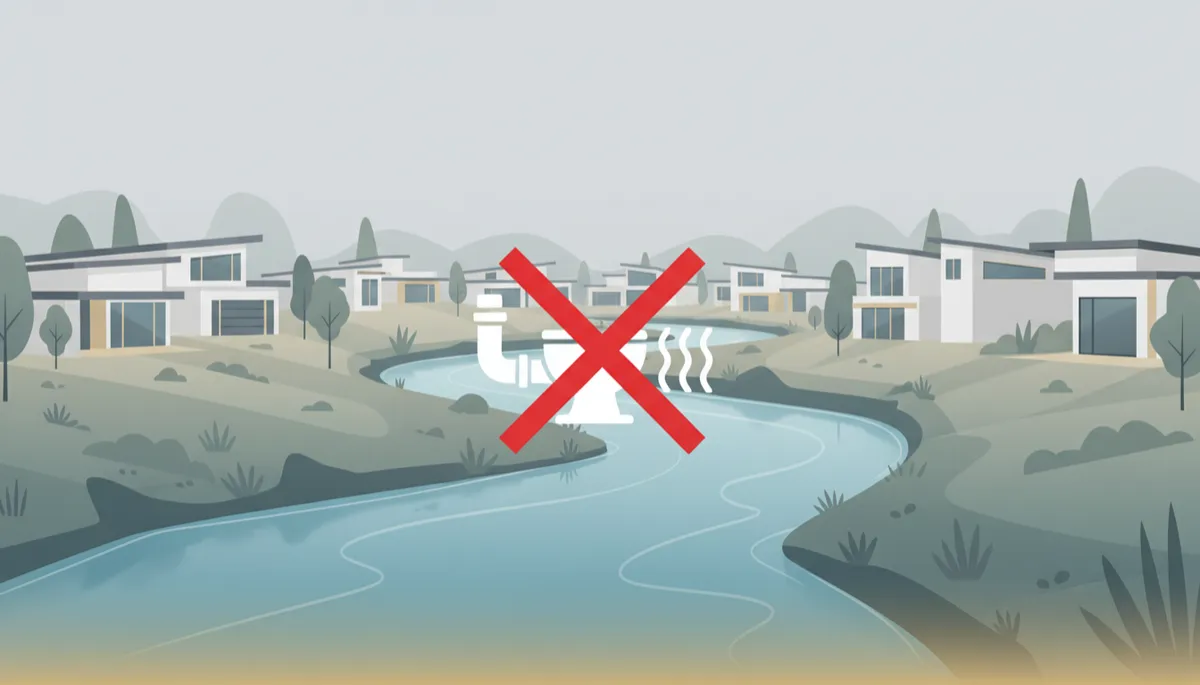
View of a clean Australian river flowing through a suburban area with houses in the background,...
Keeping cat litter out of toilets helps reduce sewage overflows and protect local rivers.
Different Types of Cat Litter — And Why None Belong in the Toilet
Not all cat litters are created equal, but they share one important rule: they should not be flushed. Understanding how each type behaves can help you choose a product that suits your household, while still disposing of it responsibly. If you’re also weighing up costs, our comparison of low‑maintenance, plumbing‑friendly cat care tips can help.
Clay-Based Clumping Litter
Traditional clumping litters are often made from bentonite clay, which swells and forms solid clumps when wet. This is excellent for scooping, but disastrous for plumbing. In pipes, the same clumping action can form rock‑hard deposits that cling to rough surfaces and trap other debris. Clay also does not break down in water or soil, so it persists in the environment for a long time.
Non-Clumping Clay and Mineral Litters
Non‑clumping clay and mineral litters may not form solid clumps, but the granules are still heavy and dense. They tend to sink and settle in pipes, especially where there is already some build‑up from grease or scale. Over time, this can narrow the pipe and lead to slow drains or complete blockages. These products are also not biodegradable in any meaningful timeframe.
Plant-Based and Biodegradable Litters (Paper, Wood, Corn, Wheat)
Many Australian cat owners are switching to plant‑based litters made from recycled paper, wood pellets, corn, wheat, or other plant fibres. These options are often marketed as biodegradable, compostable, or even “flushable”. While they may break down faster than clay, they still pose problems in plumbing and sewers:
They can swell and form soft but stubborn blockages in narrow pipes.
They still carry cat faeces and associated pathogens, including Toxoplasma gondii.
“Biodegradable” does not mean “instant”, especially in cold, low‑oxygen sewer environments.
These litters are often an excellent choice for reducing landfill impact when disposed of correctly — but that still means keeping them out of the toilet. For a deeper dive into choosing eco‑friendly products, see our article on eco‑friendly plumbing habits for pet owners.
Crystal and Silica Gel Litters
Silica gel litters use highly absorbent crystals to trap moisture and odour. These crystals do not dissolve in water and are not suitable for flushing. In pipes, they can accumulate like gravel, while still carrying urine and faecal residue. Silica litters should always be bagged and binned, never flushed or composted.
Following Local Regulations and Guidelines in Australia
Waste disposal rules in Australia can vary between states, territories, and local councils. Many councils publish clear advice on how to dispose of pet waste, including cat litter. Water utilities, too, routinely remind residents to follow the 3 Ps rule and avoid flushing anything else. Ignoring this guidance can contribute to sewer overflows and environmental damage, and in some cases may breach local bylaws or property maintenance obligations.
To stay on the right side of both the law and best practice:
Check your council website for specific advice on pet waste and composting.
Follow guidance from your local water authority on what not to flush.
Read litter packaging carefully, but prioritise local regulations over marketing claims.
💡 Pro Tip: When in doubt, assume cat litter belongs in the bin, not the bowl. It’s safer for your plumbing and your local environment. For more regulatory insights, you can also read our summary of Australian plumbing regulations homeowners should know.
Practical Alternatives: Bag and Bin Disposal Done Right
The simplest and most widely recommended way to dispose of cat litter in Australia is to scoop, bag, and bin it. This keeps parasites and odours contained and avoids any risk to plumbing or sewers. To do this in a way that aligns with environmental goals, you can make a few thoughtful choices:
Use compostable or biodegradable bags approved by your council, if available, rather than standard plastic shopping bags.
Double‑bag particularly wet or smelly litter to prevent leaks and reduce odours in your household bin.
Tie bags securely and place them in the general waste (red‑lid) bin, unless your council has specific pet‑waste collection options.
While sending litter to landfill is not perfect, it is still far less damaging than risking sewer blockages, overflows, and parasite contamination of waterways. Over time, choosing lighter, plant‑based litters can reduce the overall volume and weight of waste going to landfill. For more bin‑friendly habits that protect your drains, see our guide to disposing of household waste without clogging drains.
Choosing Better Biodegradable and Low‑Impact Litter Options
If you’re keen to reduce your household’s environmental footprint, switching to a more sustainable litter can make a meaningful difference — as long as you still avoid flushing it. Look for litters that:
Are made from renewable resources such as recycled paper, sustainably sourced wood, or agricultural by‑products.
Contain minimal synthetic fragrances and additives, which can irritate cats and complicate composting or disposal.
Are approved for composting without faeces, if you plan to use them in a dedicated pet‑waste compost system.
Remember, “biodegradable” describes how a product breaks down under the right conditions. It does not guarantee safety for flushing, nor does it mean the product is harmless if it enters waterways. Responsible disposal is still essential. If you’re looking to combine green choices with reliable plumbing, our article on sustainable home plumbing tips is a helpful next read.
Composting Cat Litter: When It’s Possible and When It’s Not
Composting can be a useful way to reduce waste, but cat litter requires special care. The main concern is again Toxoplasma gondii and other pathogens in cat faeces. Standard home compost bins rarely reach the consistently high temperatures needed to reliably kill these organisms. For that reason, most experts advise never using compost that contains cat faeces on food gardens.
Safer Composting Approaches
If your litter is plant‑based and your council permits it, you may be able to compost urine‑only litter separately, keeping all faeces out of the compost entirely.
Some households use a dedicated pet‑waste compost system or in‑ground digester, strictly for ornamental plants and non‑edible landscaping. Always check local rules and product guidelines first.
Keep compost heaps securely fenced or lidded to prevent wildlife, pets, or children from accessing partially decomposed cat waste.
If you are unsure whether your system is hot enough or approved for pet waste, it is safer to treat all used litter — especially anything containing faeces — as general waste and place it in the bin. This approach may feel less “green” at first glance, but it significantly reduces the risk of spreading parasites and protects local ecosystems. For more on composting do’s and don’ts around plumbing, see our guide to composting and your plumbing.
⚠️ Warning: Never add cat‑waste compost to vegetable beds, herb gardens, or fruit trees. The health risks outweigh any potential fertiliser benefits.
The Real Costs of Improper Cat Litter Disposal
Flushing cat litter to save a few trips to the bin can become very expensive, very quickly. The true cost of improper disposal shows up in several ways — some visible, some hidden.
Plumbing and Repair Bills
Clearing a blocked toilet or main sewer line often requires a licensed plumber with specialised equipment. Depending on the severity and location of the blockage, you might face:
Call‑out fees and hourly labour charges, especially after hours or on weekends.
Costs for CCTV inspections to locate stubborn blockages caused by litter build‑up.
Pipe repairs or replacement if the blockage has damaged older or fragile pipes.
In many cases, these costs far exceed the price of years’ worth of responsible litter disposal bags — an important reminder that prevention is almost always cheaper than cure. If you’re budgeting for future maintenance, our article on how to avoid expensive plumbing emergencies offers more cost‑saving ideas.
Damage to Property and Belongings
Severe blockages can lead to sewage backing up into bathrooms, laundries, or outdoor drains. Cleaning up after a sewage overflow is unpleasant and can involve:
Replacing carpets, underlay, or damaged flooring.
Professional cleaning and disinfection to remove contamination and odours.
Time away from home while repairs and cleaning are completed.
Insurance may cover some of these costs, but policies vary, and claims can be stressful and time‑consuming. Preventing the blockage in the first place is a far easier path. For more on safeguarding your home, explore our resource on protecting your home from sewage backups.
Environmental and Community Costs
When many households flush inappropriate items like cat litter, the cumulative impact on sewer networks is significant. Water utilities must invest more in clearing blockages, repairing pumps, and managing overflows. These costs eventually flow back to the community through higher service charges and rates. Environmental damage from overflows — such as polluted creeks or closed beaches — also affects tourism, recreation, and local wildlife.
📌 Key Takeaway: Responsible cat litter disposal is a small daily habit that helps protect your home, your neighbours, and the waterways we all share. For a broader view of community impacts, see our article on how household drains affect community infrastructure.
What to Do If You’ve Been Flushing Cat Litter
If you’re reading this because you suspect your blocked drain was caused by flushed cat litter, the first step is simple: stop flushing it immediately. Switch to a scoop‑and‑bin routine straight away. Then:
Monitor your drains and toilets for any signs of ongoing issues — slow draining, gurgling sounds, or water rising higher than usual when you flush.
If problems persist, contact a licensed plumber and mention your previous litter‑flushing habit so they can check for build‑ups in the line.
Ask your plumber about the overall condition of your pipes. Older or damaged pipes may benefit from preventive maintenance to reduce the risk of future blockages.
Going forward, choose a litter that suits your cat and your sustainability goals, but keep the disposal method simple: litter in the bin, not the bowl. Pair that with the 3 Ps rule, and you’ll dramatically lower the risk of another messy, expensive blockage. For step‑by‑step advice on getting your system back on track, read our guide to what to do after a drain blockage.
Bringing It All Together: Protecting Pipes, Health, and the Environment
Cat ownership comes with daily responsibilities, and managing the litter tray is one of the least glamorous. It can be tempting to believe that a quick flush is an easy, hygienic solution. Yet the evidence — from blocked household drains to stressed sewer systems and vulnerable waterways — tells a different story. Whether your litter is clay, crystal, paper, wood, or plant‑based, flushing it risks plumbing problems, spreads parasites like Toxoplasma gondii, and adds unnecessary pressure to Australian rivers and coasts.
By following local regulations, respecting the 3 Ps rule, and choosing practical alternatives such as bag‑and‑bin disposal, biodegradable litters, and carefully managed composting systems, you can care for your cat without compromising your home or the environment. A few extra steps with the litter scoop today can save you from costly call‑outs, unpleasant clean‑ups, and long‑term damage to the waterways that make Australian life so special. For a full home‑wide approach, our article on whole‑home drain care ties these habits together.
If you think your blocked drain was caused by cat litter, take it as a turning point rather than just a frustrating expense. Change how you dispose of litter, share what you’ve learned with other cat owners, and help keep our pipes clear and our rivers clean — one responsible flush (and non‑flush) at a time.
📌 Ready for help now? If you’re in Australia and dealing with a suspected cat‑litter blockage, don’t wait for it to get worse. Call your local licensed plumber today for an inspection and clear‑out, and ask them to walk you through simple prevention steps tailored to your home. Your pipes, your pets, and your local waterways will all be better off. For more preparation tips before they arrive, you can also read our checklist on how to prepare for a plumber visit.